
Understanding George Tritch's Periods of Profit: Navigating Price Cycles in Financial Markets
12/23/20257 min read
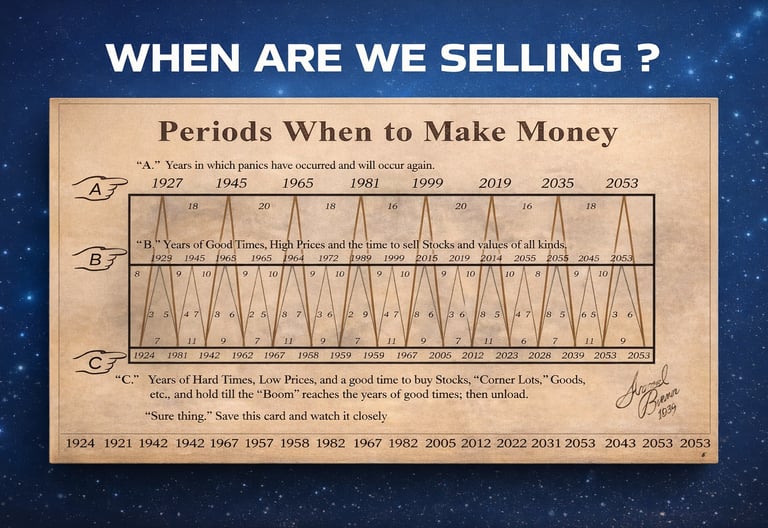
Understanding Price Cycles in Financial Markets
Price cycles in financial markets refer to the fluctuations in prices for various financial instruments over defined periods. These cycles are characterized by phases of expansion and contraction, influenced by various economic factors, investor sentiment, and external events. Understanding these cycles is crucial for investors because they provide insights into market behavior and can inform strategic investment decisions. By recognizing the patterns of price movement, investors can more effectively time their entries and exits, thereby optimizing their potential for profits.
George Tritch, a notable figure in the analysis of market cycles, posits that financial markets operate on distinct periods that are predictable to an extent. His theories on price cycles emphasize the significance of timing, allowing investors to anticipate market trends and positioning accordingly. Tritch's analysis is built upon the observation that markets tend to react to economic changes and investor psychology in cyclical patterns. These insights can aid investors in understanding when to buy or sell their assets to maximize returns and minimize losses.
Furthermore, recognizing the phases within these cycles can help in risk management. For instance, during a bullish phase, the market sentiment leans towards optimism, leading to price increases, while a bearish phase suggests caution and declining prices. By comprehensively understanding these cycles, as delineated by Tritch, investors can navigate financial markets with greater precision, ensuring that their investment strategies are tuned to the current economic landscape.
This foundational understanding of price cycles not only informs investment decisions but also enhances overall market literacy. As we explore George Tritch's theories further, we will delve into specific periods when investors have the opportunity to capitalize on these insights effectively.
The Foundations of George Tritch's Market Theories
George Tritch, a prominent figure in financial market analysis, is renowned for his contributions to understanding price cycles. Born into a family of economists, Tritch developed an early fascination with market dynamics, which led to the establishment of his distinct methodologies for analyzing price patterns. His approach is characterized by a blend of empirical observation and theoretical grounding, which allows traders to navigate the often tumultuous financial landscape with confidence.
The cornerstone of Tritch's market theories is his emphasis on the cyclical nature of prices. He posits that financial markets are inherently driven by recurring patterns influenced by a multitude of factors, including supply and demand, investor sentiment, and economic indicators. By identifying these cycles, traders can make informed decisions that align with the market's trajectory. Tritch's focus on patterns extends to both short-term and long-term cycles, underscoring the need for adaptability in trading strategies.
Another fundamental aspect of Tritch's theories is the integration of technical analysis. He advocates for the examination of historical data and price movements to forecast future trends, applying various tools such as charts and indicators. This analytical framework not only aids in pinpointing entry and exit points but also enhances the trader’s understanding of market psychology. Tritch’s methods reveal that successful trading is not merely about predicting price movement but rather understanding the underlying factors that drive these movements.
Ultimately, George Tritch's theories serve as a foundation for traders seeking clarity in their market engagements. By focusing on price patterns and cycles, investors are better equipped to interpret market conditions and make strategic decisions. The relevance of Tritch's work continues to resonate, providing a comprehensive approach to navigating the complexities of financial trading.
Identifying Periods of Profitability
Understanding the timeframes and conditions that facilitate profitable trading is essential for investors navigating financial markets. George Tritch’s analytical framework revolves around identifying optimal periods for making money, which he correlates with specific technical indicators, prevailing market sentiment, and various economic factors.
Technical indicators play a crucial role in signaling potentially lucrative trading opportunities. Tritch often highlights crucial indicators such as moving averages, Relative Strength Index (RSI), and Bollinger Bands. For instance, when the moving average of a security crosses above its long-term average, it may indicate a bullish trend, presenting an opportunity for investors to enter the market. Similarly, an RSI reading below 30 might suggest that an asset is oversold, potentially paving the way for a price rebound.
Market sentiment, too, serves as a pivotal aspect in identifying profitable periods. Positive sentiment can drive prices higher, while negative sentiment often correlates with downturns. By analyzing sentiment trends through tools such as social media analytics and investor surveys, traders can gauge market psychology and position themselves strategically. Tritch emphasizes the importance of paying attention to news cycles and economic reports that can sway investor opinion and thus impact asset prices substantially.
Economic factors such as interest rates, unemployment rates, and overall economic indicators provide further insight into profitable trading conditions. For example, lower interest rates generally promote borrowing and spending, which can stimulate the economy and lead to greater demand for stocks. Consequently, maintaining an awareness of these macroeconomic conditions is critical for determining the timing of market entries and exits.
In summary, by combining technical indicators, market sentiment analysis, and a keen understanding of economic factors, investors can successfully identify periods of profitability in the financial markets. Adopting Tritch’s approach enables traders to optimize their strategies and seek out favorable trading conditions effectively.
Case Studies: Historical Evidence of Price Cycles
The analysis of price cycles in financial markets is a key area of exploration within George Tritch's theories. Historical case studies provide a rich foundation for understanding how these cycles have impacted trader profitability. One notable example can be found during the dot-com bubble of the late 1990s and early 2000s. Many investors were lured into technology stocks, driven by the rapid rise of internet-based companies. As prices soared, many traders neglected Tritch’s principles of caution and market analysis, leading to significant losses as the bubble burst. This case illustrates the importance of recognizing the cyclical nature of market psychology and its consequences on trading behavior.
Another illustration of Tritch's theories in action can be seen in the housing market crash of 2008. Prior to the downturn, housing prices experienced an unsustainable growth cycle, fueled by easy credit and speculative investments. Some investors heeded the warning signs of a deteriorating bubble, employing Tritch's insights to mitigate their risks. In contrast, many traders who failed to recognize the cyclical trends faced devastating losses when prices plummeted. This historical example underscores how market cycles are not merely abstract concepts but have tangible effects on profitability.
Furthermore, the commodities market provides additional evidence of price cycles. For instance, the surge in oil prices during the early 2000s was followed by a sharp decline in subsequent years. Traders who understood the cyclical nature of commodity prices were able to capitalize on buying opportunities during the downturn, showcasing Tritch's principles in real-world scenarios. Each of these case studies reinforces the notion that understanding price cycles is crucial for informed trading strategies, offering valuable lessons for contemporary investors navigating today's markets.
Practical Application of Tritch's Strategies
To successfully implement George Tritch's insights and strategies in the modern financial marketplace, traders must adopt a structured approach that emphasizes both effective tools and sound risk management. One of the first steps for traders is to utilize advanced analytical platforms that offer real-time data visualization and market analysis. Tools such as MetaTrader, TradingView, and Thinkorswim equip traders with the capacity to chart price movements, back-test strategies, and execute trades based on clear criteria derived from Tritch's methodologies.
Moreover, integrating Tritch's strategies into a broader trading plan necessitates a firm grasp of price cycles and market sentiment. For instance, traders can leverage trend-following strategies during periods of market expansion and consider mean-reversion tactics during phases of price correction. Utilizing financial indicators, such as moving averages and the Relative Strength Index (RSI), can further help traders align their strategies with prevailing market conditions informed by Tritch's principles.
An essential component of effective trading is cultivating a robust risk management framework. This includes setting clear stop-loss orders and position sizing to protect capital while allowing room for profit maximization. Traders should also consider employing diversified strategies across different asset classes, which can mitigate exposure to volatility and unexpected market changes.
Finally, continuous education and remaining updated on market news play a critical role in applying Tritch's strategies. Engaging with financial forums, webinars, and investment newsletters can help traders refine their techniques and maintain a competitive edge. By synthesizing Tritch’s insights with current market trends and technological tools, traders can navigate the complexities of financial markets more effectively, aiming for success while adhering to prudent risk management practices.
Common Pitfalls and Misunderstandings
When navigating the complexities of financial markets, particularly in relation to George Tritch's theories on price cycles, it is crucial to recognize certain common pitfalls and misunderstandings that can undermine investment strategies. One prevalent misconception is the assumption that price cycles are predictable and can be accurately forecasted with certainty. While Tritch offers valuable insights into the cyclical nature of prices, unforeseen economic events can disrupt these patterns, leading to unexpected market movements. Thus, investors should avoid becoming overly reliant on historical data alone without considering current market conditions.
Another frequent trap is the tendency to seek immediate gratification in trading outcomes. The financial markets are characterized by volatility, and it is tempting for investors to react impulsively to short-term fluctuations. This behavior contradicts Tritch’s emphasis on understanding long-term price cycles. Successful investing requires patience and a strategic approach that appreciates the time horizon of price movements. Consequently, investors are encouraged to resist the urge to make hasty decisions based on momentary gains or losses.
Additionally, inadequate research can lead to significant misunderstandings regarding Tritch’s theories. Investors must be diligent in educating themselves about the foundational concepts of price cycles rather than relying solely on secondary interpretations. Engaging with comprehensive academic resources and analytical tools can foster a deeper understanding of the underlying principles governing market behavior. A commitment to continuous learning is essential in avoiding misinterpretations that could result in poor investment choices.
In summary, by recognizing these common pitfalls—misplaced expectations of predictability, the impulse for immediate results, and insufficient comprehension of Tritch's theories—investors can better navigate price cycles in financial markets. Emphasizing thorough research and a disciplined investment approach enhances the chances of achieving favorable outcomes.
Conclusion and Call to Action
Understanding the intricacies of price cycles in financial markets is pivotal for traders and investors aiming for success. George Tritch's insightful analysis of periods of profit serves as a valuable framework for recognizing and navigating these cycles effectively. By grasping the significance of price fluctuations and market behavior, traders enhance their capacity to make informed decisions that align with their investment strategies.
Through this discussion, we have highlighted how price cycles can influence market trends and impact potential returns on investment. Acknowledging these cycles is essential, as they can guide trading strategies and ultimately optimize profitability. Moreover, the integration of educational resources and trading platforms can further empower traders to deepen their understanding and skill set. As we have seen, continuous learning and adaptation are crucial in a fast-paced financial environment.
To advance your trading acumen, consider engaging with reputable trading platforms such as OKX-EXCHANGE, where you can explore a variety of cryptocurrency options and market analyses. Furthermore, enhancing your knowledge through resources like GO AI-ACADEMY will provide you with tools necessary for mastering the art of trading. This continuous investment in your education is not only beneficial but imperative in ensuring long-term success in navigating price cycles.
In conclusion, by leveraging the insights presented in this post and committing to further your education and skills, you can significantly enhance your ability to navigate the complexities of financial markets, ultimately leading to better trading outcomes.
EconoTrade Insights
Learn. Trade. Grow.
Empowering financial freedom through smart education and trusted tools.
© 2025 ECONO TRADE INSIGHTS. All rights reserved.
About - https://econotradeinsights.com/about-us-financial-blogging
Contact - econotradeinsights@gmail.com
Disclaimer - https://econotradeinsights.com/disclaimer
Terms & Conditions - https://econotradeinsights.com/terms-and-conditions