Understanding the Surge: What’s Driving Gold's Soaring Prices in 2023
12/15/20255 min read
The Current Market Landscape
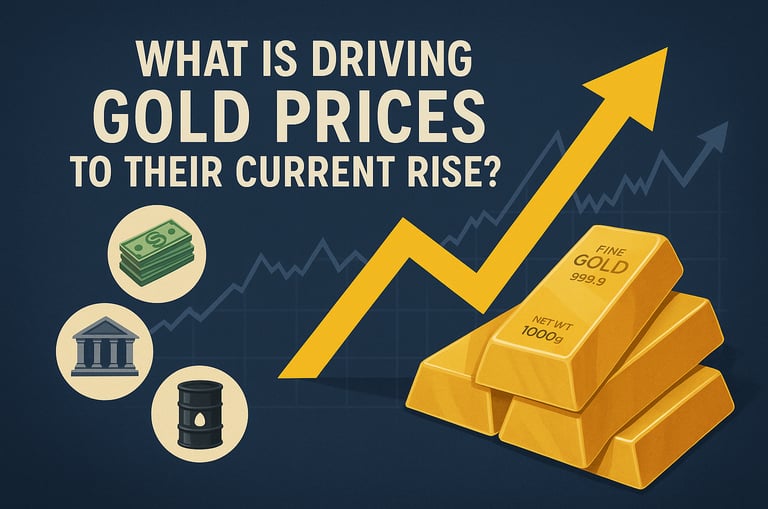
The recent surge in gold prices can be attributed to several vital economic factors that shape the current market landscape. First and foremost, inflation rates have significantly impacted investor behavior. As the cost of living rises, many investors seek refuge in gold, which is traditionally viewed as a hedge against inflation. This behavior stems from gold’s historical role as a reliable store of value when fiat currencies experience devaluation. Consequently, rising inflation has intensified the demand for gold, pushing its prices higher.
Another key element contributing to the increase in gold prices is the fluctuations in currency values. As the U.S. dollar experiences volatility, investors typically gravitate towards gold as a safe-haven asset. A weaker dollar makes gold cheaper for holders of other currencies, leading to increased demand. Furthermore, the interplay of various currencies against one another creates an environment where gold’s value can fluctuate, causing investors to seek stability in this precious metal.
In addition to inflation and currency dynamics, global financial crises and geopolitical tensions play a crucial role in driving gold’s appeal. Uncertainties stemming from political instability, potential military conflicts, and economic downturns heighten risk aversion among investors. In such scenarios, gold often emerges as a preferred investment, further bolstering its price. This sentiment underscores the significant influence of external factors on investor behavior, as the pursuit of security in uncertain times leads to increased gold purchases.
Moreover, the rise of digital currencies, such as cryptocurrencies, has begun to impact traditional assets like gold. While some view cryptocurrencies as a competing store of value, others acknowledge that both can coexist in a diversified portfolio. This evolving landscape necessitates a deeper understanding of the interplay between these assets. For those interested in cryptocurrency investments, using OKX-Exchange and enhancing their financial education through GO AI-ACADEMY are advisable paths to consider.
Historical Context of Gold Prices
Gold has long been regarded as a safe haven for investors, particularly during periods of economic uncertainty. Examining the historical context of gold prices reveals how various economic downturns and significant global events have influenced its valuation. For instance, during the 2008 financial crisis, gold prices surged dramatically as investors sought refuge from stock market volatility and declining asset values. This crisis underscored gold's reputation as a reliable store of value amidst financial instability.
Additionally, past inflationary periods have played a significant role in driving up gold prices. When inflation rates rise, currency value diminishes, prompting investors to turn to gold as a hedge against eroding purchasing power. The late 1970s witnessed substantial spikes in gold prices as inflation reached double-digit levels, marking a historical moment when gold became a preferred asset for wealth preservation. Similar patterns can be observed in other inflationary cycles throughout history, reinforcing the notion that gold serves as a protective asset during challenging times.
Global tensions, such as geopolitical conflicts and trade disputes, further contribute to fluctuations in gold prices. Significant spikes often coincide with heightened uncertainty on the global stage, prompting investors to flock to gold. This behavior is not just a modern phenomenon; it has been a consistent trend throughout history, with gold emerging as a calming force during tumultuous periods, thereby solidifying its position in investment strategies aimed at risk mitigation.
Understanding these historical milestones is crucial for comprehending the current dynamics of the gold market. As you consider your investment options, exploring educational resources at GO AI-ACADEMY can provide valuable insights into how past events shape today’s investment landscape. Such knowledge will assist in formulating strategies that align with both historical trends and current market conditions.
The Impact of Interest Rates and Inflation
The dynamics of interest rates and inflation have a significant influence on gold prices, particularly in an economic landscape characterized by volatility. Historically, low-interest rates create a favorable environment for gold investment. When interest rates decline, the opportunity cost of holding non-yielding assets, such as gold, diminishes. Investors seeking to optimize their portfolios find it more attractive to allocate funds to gold rather than interest-bearing assets like bonds. This phenomenon has been evident in 2023, where numerous central banks have adopted accommodative monetary policies, resulting in sustained low rates.
Moreover, inflation has emerged as a pivotal factor affecting the demand for gold. As inflation rates rise, the purchasing power of currency declines. This erosion prompts investors to turn to gold as a traditional store of value. In the context of 2023, many economies have experienced increased inflationary pressures, driven by supply chain disruptions and shifts in consumer demand post-pandemic. For instance, the Consumer Price Index (CPI) has shown significant increases, underscoring the growing concern among investors that their cash reserves may lose value if inflation continues unchecked.
Recent statistics indicate that gold has experienced price surges aligned with inflation trends. In the first quarter of 2023, gold prices reached record highs as investors sought safety amidst fears of escalating inflation. This strategy of using gold as a hedge against inflation has reinvigorated interest among a diverse array of investors, from individuals looking to safeguard their wealth to institutional players diversifying their portfolios. Thus, understanding the interplay of interest rates and inflation is essential for investors aiming to capitalize on current economic conditions.
For those looking to navigate these economic waves effectively, resources from OKX-Exchange can assist in developing diversified investment strategies that encompass both traditional assets like gold and emerging options such as cryptocurrencies. By blending these assets thoughtfully, investors may better prepare for potential market fluctuations.
Future Predictions for Gold Prices
The landscape of gold prices in the coming years is shaped by multifaceted factors that include economic indicators, geopolitical events, and technological advancements. Experts suggest that the prevailing uncertainties in global markets, including inflation and potential recessions, could contribute to a sustained interest in gold as a safe-haven asset. Financial institutions often point to historical trends where gold prices have surged during economic downturns, a pattern that may repeat itself in the near future.
Analysts are also considering the impact of rising interest rates on gold's attractiveness. Higher interest rates typically make other investments more appealing compared to gold, which does not yield any interest. This dynamic could cause fluctuations in gold’s value. Nonetheless, the relentless increase in consumer demand for gold in emerging markets, particularly in Asia, continues to serve as a substantial driver. As these economies expand, their demand for gold jewelry and investments remains robust, potentially supporting higher price levels.
Emerging technologies and innovation in the extraction and recycling of gold might also influence future valuations. With advances in methods to mine gold more efficiently and sustainably, supply constraints could ease over time, affecting market prices. Additionally, consumer behavior is evolving, with younger generations showing increased interest in sustainable and ethically sourced investments, which may lead to heightened demand for gold with verified certifications.
The volatile nature of the gold market necessitates a vigilant approach for investors. Understanding the indicators that forecast price movements is crucial in navigating this fluctuating environment. Being knowledgeable about market trends, economic forecasts, and investment strategies can prepare individuals for the unpredictable nature of gold investments. For those eager to deepen their financial acumen, I encourage exploring resources at GO AI-ACADEMY, helping to make informed decisions tailored to the contemporary market dynamics.
EconoTrade Insights
Learn. Trade. Grow.
Empowering financial freedom through smart education and trusted tools.
© 2025 ECONO TRADE INSIGHTS. All rights reserved.
About - https://econotradeinsights.com/about-us-financial-blogging
Contact - econotradeinsights@gmail.com
Disclaimer - https://econotradeinsights.com/disclaimer
Terms & Conditions - https://econotradeinsights.com/terms-and-conditions