
Is 2026 the Year to Invest in Rare Metals? Predictions on Rising Prices
12/25/20257 min read
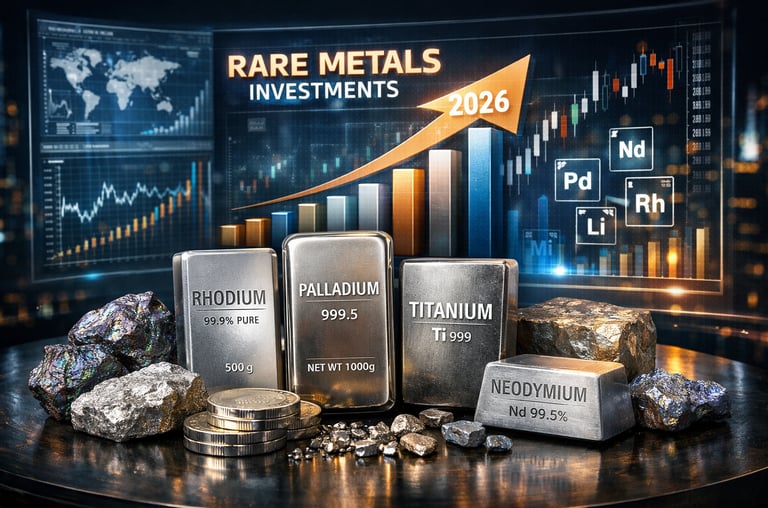
Introduction to Rare Metals and Their Importance
Rare metals, often referred to as rare earth elements, comprise a group of 17 chemical elements that are critical in various industrial applications and technologies. These metals, including lanthanum, cerium, neodymium, and dysprosium, among others, possess unique properties that make them invaluable in sectors such as electronics, renewable energy, and advanced manufacturing.
The significance of rare metals is particularly pronounced in the technology industry, where they are essential components in the production of smartphones, computers, and various electronic devices. For example, neodymium is widely used in the manufacture of high-performance magnets required for electric vehicles and wind turbine generators, making it crucial for the ongoing transition to renewable energy sources. As countries around the globe strive to decrease their carbon footprints, the demand for these metals continues to surge.
Moreover, rare metals are integral to achieving advancements in industries beyond technology, including defense systems, automotive production, and environmental applications. Their unique characteristics enable innovations in materials science that contribute to more efficient and effective products. As industries evolve, the utility of rare metals expands, reinforcing their importance in future technological developments.
Current trends in investment circles highlight an increased interest in rare metals, spurred by environmental policies, technological advancements, and supply chain disruptions that affect availability. As nations push for greener alternatives and strive for technological progress, investors are recognizing the potential of rare metals as a lucrative asset class. The alignment of demand with technological variables positions these metals as a focal point for investment, advocating for insightful predictions about their market trajectories in the coming years.
Current Trends in Rare Metal Prices
The prices of rare metals have experienced notable fluctuations in recent months, predominantly due to a confluence of geopolitical tensions, supply chain disruptions, and increasing environmental regulations. Analyzing these factors provides insight into the market dynamics shaping the future of rare metals.
Geopolitical issues have proven to be a significant catalyst for changes in the prices of metals such as lithium, cobalt, and rare earth elements. For instance, trade tensions between major economies, particularly those involving China and the United States, have created uncertainty in supply chains. As countries grapple with national security concerns related to resource availability, investors are increasingly monitoring how these geopolitical landscapes could impact supply and the resultant price movements.
Moreover, the ongoing disruptions in global supply chains, exacerbated by the COVID-19 pandemic, have had lasting effects on the availability of rare metals. Delays in production, transportation challenges, and labor shortages have all contributed to an erratic supply that often does not meet the growing demand from industries such as technology and renewable energy. As renewable technologies continue to advance and gain traction, the demand for critical metals, especially those crucial for battery production and electric vehicles, has surged, thus placing upward pressure on prices.
Another influencing factor is the tightening of environmental regulations. As governments worldwide implement stricter environmental policies, companies involved in the mining and processing of rare metals must adapt their operations to comply with sustainability standards. This often entails increased operational costs, which can subsequently reflect in metal prices. The growing emphasis on sustainable sourcing has made investors more vigilant about the ethical implications of specific metals, impacting market sentiment and price trends.
Overall, the price trends of rare metals are notably influenced by a mixture of geopolitical issues, supply dynamics, and environmental considerations. These aspects will continue to shape the investment landscape into 2026 as consumer preferences and regulatory frameworks evolve.
Forecasting the Future: Expert Predictions for 2026
The rare metal market is subject to fluctuations that can be influenced by various global factors such as economic growth, technological advancements, and geopolitical events. Experts predict that by 2026, the prices of rare metals will experience notable changes driven by these dynamics. Recent market reports indicate a positive outlook for rare metals like lithium, cobalt, and platinum, emphasizing their critical roles in emerging industries.
For instance, the shift towards electric vehicles (EVs) continues to bolster demand for lithium due to its essential use in batteries. Experts have highlighted that as countries implement stricter emissions regulations and consumers exhibit a growing preference for sustainable transportation, the demand for lithium and other rare metals is likely to surge. Additionally, investment in renewable energy technologies that require rare metals could further drive prices upwards.
Economic indicators also play a crucial role in forecasting future price trends. Analysts point to a projected recovery in global economies post-pandemic, which may lead to increased industrial activity and demand for rare metals. Furthermore, inflationary pressures could contribute to price increases as producers pass on costs to consumers. Experts suggest monitoring key market trends, including changes in production levels and the introduction of new mining technologies that could enhance supply.
In addition, geopolitical tensions and trade negotiations could impact the availability of rare metals, leading to potential price volatility. Analysts are urging stakeholders to remain vigilant about international developments, as these factors can significantly shape market landscapes. Overall, while the future of the rare metals market is promising, it is essential to consider the various indicators and trends influencing price fluctuations as we approach 2026.
Why 2026 Might Be the Best Year to Invest
As we look toward the future, 2026 is emerging as a potential turning point for investors considering rare metals. Several interconnected factors contribute to this outlook, making it an opportune time to delve into this market. One of the primary reasons is the anticipated shortages of essential rare metals. With the rapid advancement of technology, industries are increasingly reliant on these materials for producing high-tech products, renewable energy solutions, and electric vehicles.
In particular, metals such as cobalt, lithium, and rare earth elements are witnessing an uptick in demand. The electric vehicle industry is projected to expand significantly by 2026, driven by the global push towards sustainable transport. This rising demand is anticipated to outpace the available supply, thus creating favorable conditions for price increases in these metals. Furthermore, as new sources for extraction are explored, the discovery and development of rare metals could be hampered by strict environmental regulations and geopolitical instability, exacerbating potential shortages.
Another factor contributing to this positive investment outlook is the ongoing technological advancements within various sectors. Innovations in mining technology and recycling processes are expected to provide more efficient means of obtaining and reusing rare metals, thereby increasing their availability and impacting pricing structures. However, as these technologies are still developing, the transitional period may spike prices in the short term, making early investments more attractive.
Moreover, global economic trends indicate a heightened emphasis on sustainable practices and green technologies, which will inevitably lead to increased investments in rare metals. Investors who act early may benefit significantly, not just from rising prices but also from aligning their portfolios with a forward-thinking approach aimed at addressing future demands.
Investment Strategies for Rare Metals
Investing in rare metals can be a lucrative endeavor, particularly in the context of increasing demand driven by technological advancements and renewable energy initiatives. One of the foundational strategies is to invest in physical metals. This approach includes buying bullion or coins, which allows investors to hold tangible assets. It is crucial to ensure that these metals are sourced from reputable dealers to avoid counterfeit products. Additionally, securing storage in a safe environment adds another layer of protection for investors.
Another viable strategy is to invest in stocks of companies engaged in the mining and production of rare metals. These companies often have stronger growth potentials as they capitalize on rising prices and increasing global demand. Investors should conduct thorough due diligence on these companies, analyzing factors such as their operational efficiency, financial health, and management expertise. Investing in well-established firms, as opposed to startups, can provide more stability to one's portfolio.
Exchange-Traded Funds (ETFs) focused on the rare metals market are also an attractive option for investors wishing to diversify their portfolios without directly purchasing physical metals. ETFs can be a cost-effective way to gain exposure to a wide array of mining companies or specific rare metals. Researching the underlying assets of these ETFs, their management fees, and performance history is essential before committing capital.
As the market evolves, the importance of due diligence and comprehensive market research cannot be overstated. Monitoring geopolitical events, supply and demand dynamics, and technological innovations will provide critical insights that inform investment decisions. Overall, employing a combination of these strategies can help investors effectively navigate the complexities of rare metal investments.
Risks and Considerations for Investors
Investing in rare metals can offer significant potential benefits; however, it is essential to recognize the associated risks that investors may encounter in this volatile market. One primary concern is market volatility, which can impact the prices of rare metals significantly. Fluctuations in supply and demand often result in unpredictable price movements, making it challenging for investors to anticipate returns. These fluctuations may arise from various factors, including changes in global industrial demand, technological advancements, or shifts in consumer trends.
In addition to market volatility, geopolitical risks also pose a considerable threat to investors in rare metals. Many of these commodities are sourced from regions prone to political instability, conflict, or trade disputes. For instance, sanctions or regulatory restrictions imposed by governments can limit access to essential resources, subsequently driving up prices or disrupting supplies. Investors must remain cognizant of international relations and legislative changes that may impact the availability and pricing of rare metals.
Furthermore, regulatory challenges represent an important consideration. The mining and production of rare metals are often subject to stringent environmental regulations that can affect operations. Changes in legislation can impose additional costs on mining companies, ultimately influencing the profitability of investments in rare metals. It is crucial for investors to thoroughly examine the regulatory landscape to mitigate potential pitfalls associated with their investments.
Thus, while the allure of investing in rare metals may be enticing, it is paramount for investors to weigh these risks carefully against potential rewards. Conducting comprehensive research and considering market dynamics, geopolitical realities, and regulatory frameworks will help investors make informed decisions in the complex world of rare metal investment.
Conclusion and Call to Action
In this exploration of the rare metals market, we have highlighted several key factors suggesting that 2026 may be a significant year for investing in these valuable resources. The increasing demand for renewable technologies, such as electric vehicles and sustainable energy solutions, positions rare metals like lithium, cobalt, and palladium as essential components in the transition to a greener economy. Additionally, geopolitical tensions and mining constraints have the potential to drive prices higher as supply may not keep pace with the demand.
Furthermore, inflationary pressures and global economic recovery efforts could lead to a bullish trend in rare metals investing. Investors should remain attentive to market trends and technological advancements that may impact the value of these commodities. By taking a proactive approach to your financial education, you can better navigate the complexities of the rare metals marketplace.
To empower yourself with the knowledge and insights needed for making informed investment decisions, we encourage you to explore resources such as GO AI-ACADEMY. This trusted online academy specializes in educating individuals about various investing strategies, including those specific to rare metals. By enhancing your understanding of market dynamics, you can position yourself to seize opportunities as they arise. Investing in rare metals may very well be a wise decision in 2026, and equipping yourself with the right knowledge is the first step towards success.
EconoTrade Insights
Learn. Trade. Grow.
Empowering financial freedom through smart education and trusted tools.
© 2025 ECONO TRADE INSIGHTS. All rights reserved.
About - https://econotradeinsights.com/about-us-financial-blogging
Contact - econotradeinsights@gmail.com
Disclaimer - https://econotradeinsights.com/disclaimer
Terms & Conditions - https://econotradeinsights.com/terms-and-conditions