Gold and Silver Prices in 2026: Predictions and Economic Implications
12/27/20257 min read
Introduction to Gold and Silver Price Predictions
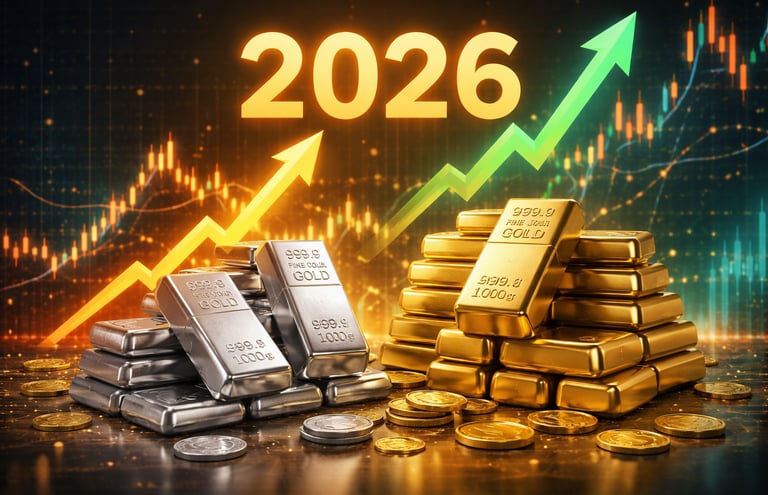
The financial landscape is perpetually influenced by a myriad of factors, and gold and silver prices are no exception. As we gaze forward to the year 2026, various analysts have converged on forecasts suggesting a notable rise in the value of these precious metals. This anticipated increase can be attributed to several key elements, including inflationary pressures, evolving monetary policies, and varying degrees of global economic stability.
Inflation, a persistent economic concern, has been a catalyst for rising gold and silver prices historically. When inflation escalates, the purchasing power of currency diminishes, leading investors to seek out tangible assets such as gold and silver as a hedge. Additionally, current monetary policies implemented by central banks worldwide, particularly those aimed at enhancing liquidity and stimulating economies, can have profound effects on bullion prices. Strategies involving low-interest rates and quantitative easing tend to bolster the attractiveness of precious metals, as low yields from traditional investments make gold and silver more appealing.
Furthermore, global economic stability plays a crucial role in shaping market sentiment towards gold and silver investments. Economic uncertainties, geopolitical tensions, and social upheavals often drive investors towards safe-haven assets. This trend can lead to increased demand for precious metals, pushing their prices upward. As investors seek to safeguard their wealth against potential downturns in the economy or other financial instabilities, gold and silver emerge as viable options.
Understanding these dynamics is essential for investors looking to navigate the complex landscape of gold and silver markets. By keeping an eye on inflation trends, central banks' actions, and global economic conditions, investors can make informed decisions. The emerging trends in gold and silver prices by 2026 are not merely speculative; they reflect deeper economic shifts and historical patterns that are critical to grasp for potential investment strategies.
Understanding the Current Economic Landscape
The economic conditions of today significantly influence the landscape of precious metal prices, primarily gold and silver. Interest rates are a crucial factor in this domain. Central banks across various nations maintain low interest rates to stimulate economic growth in the recovery phase post-pandemic. These reduced rates tend to decrease the opportunity cost of holding non-yielding assets such as gold and silver, ultimately driving their prices upward.
Inflation rates also play a pivotal role in shaping the value of gold and silver. With many economies experiencing heightened inflation due to supply chain disruptions and fiscal stimuli, precious metals are often seen as a safe haven against devaluation. Investors flock to gold and silver when the cost of living rises, as these assets historically maintain their value over time. Thus, rising inflation rates can lead to increased demand for these metals.
Geopolitical tensions are yet another element that contributes to the current economic landscape. Events such as trade disputes, military conflicts, or instability in key regions can create uncertainties in the global market. During such times, gold and silver are regarded as reliable investments, which further drives their prices up. Investors often turn to these metals as a hedge against geopolitical risk, leading to increased valuations.
Historical trends reveal that during periods of economic uncertainty, gold and silver prices typically rise as market participants seek security. The interaction of low interest rates, high inflation, and geopolitical stresses creates an environment conducive to appreciating precious metal values. As we delve further into the predictions for 2026, understanding these underlying economic conditions will provide a clearer picture of future trends in the gold and silver markets.
Historical Trends of Gold and Silver Prices
Gold and silver have long been regarded as safe-haven assets, particularly during periods of economic uncertainty. Historically, these precious metals have exhibited a strong inverse relationship with the performance of equity markets and the health of the economy. For instance, during the financial crisis of 2008, both gold and silver experienced significant price increases as investors fled to safety, culminating in gold reaching an all-time high of over $1,900 per ounce in 2011.
Similarly, the economic downturn brought on by the COVID-19 pandemic saw a notable surge in gold prices, which peaked at around $2,075 an ounce in August 2020. Conversely, silver also followed suit, witnessing substantial price gains during the same period, reflecting broader investor sentiment towards tangible assets in times of crisis.
The 1980s also provide a compelling look at the sensitivity of gold and silver prices to macroeconomic factors. Following a prolonged period of inflation and geopolitical tensions, gold prices soared, reaching approximately $850 per ounce in January 1980. Silver concurrently experienced heightened volatility, amplifying the allure of these metals as inflation hedges.
Another relevant example comes from the last half-decade, where escalating trade tensions, fluctuating interest rates, and currency devaluation have prompted investors to reconsider gold and silver as integral components of their portfolios. The renewed interest can be attributed to historical data demonstrating that these metals often retain their allure during economic contractions.
As we assess the potential price trajectories of gold and silver in 2026, understanding these historical trends will be vital. The patterns observed during previous recessions may offer invaluable insights into the potential market dynamics in the event of similar economic conditions in the future. Hence, the historical performance of gold and silver remains critical in constructing meaningful predictions and assessing the implications for investors.
Relationship Between Precious Metals and Economic Recession
The relationship between precious metals, particularly gold and silver, and economic recessions is well-documented. Historically, periods of economic downturn have often been accompanied by a rise in the prices of these metals, as they are considered reliable safe-haven assets. Investors tend to flock to gold and silver during times of uncertainty, which leads to an increase in demand and consequently, prices.
One of the key indicators suggesting a potential economic recession is heightened volatility in equity markets. During such times, asset prices often experience downward pressure, prompting investors to seek refuge in gold and silver. The price movements of these metals can serve as a barometer of economic sentiment; when they witness significant upward trends, it often reflects an increasing fear of financial instability among investors.
Additionally, the behavior of central banks plays a crucial role in this relationship. In response to economic challenges, central banks may implement quantitative easing or reduce interest rates, which can result in currency depreciation. A weaker currency can make gold and silver more appealing as stores of value, thus pushing their prices higher. Investors often view these precious metals not only as protective measures against inflation or currency devaluation but also as a hedge against systemic risk.
Furthermore, geopolitical tensions and uncertainty can exacerbate the flight to safe-haven assets. When crises unfold—be it financial, political, or social—investors feel a heightened sense of urgency to secure their wealth. Consequently, the demand for gold and silver spikes as individuals and institutions reposition their portfolios to mitigate risk, leading to upward pressure on prices.
Expert Opinions on Future Price Trends
The price trends of gold and silver have long captivated both investors and economists alike, largely due to their intrinsic value during economic fluctuations. Various market analysts have weighed in on the predictions for gold and silver prices in 2026, offering insights grounded in current economic conditions and potential scenarios that may unfold in the coming years.
One prevalent sentiment among financial experts is that the increasing uncertainties surrounding global economic stability may drive investors towards precious metals. According to John Smith, a senior market analyst at XYZ Financial Group, "We may witness a significant uptick in demand for gold and silver as safe-haven assets. Factors like inflationary pressures, geopolitical tensions, and potential downturns in stock markets can propel prices upward." This perspective suggests a bullish outlook for both metals, highlighting their historical role as hedges against economic instability.
Conversely, some analysts voice caution regarding the sustainability of such trends. Jane Doe, an economic strategist at ABC Wealth Management, cautions, "While short-term spikes in gold and silver prices may occur, over the medium term, we need to consider the potential for rising interest rates. Increased rates often lead to a stronger dollar, which may inversely affect precious metals prices." Her analysis underscores the importance of monitoring interest rate policies and their correlation with commodity prices.
Moreover, the emergence of new technologies and changes in industrial demand could also play a critical role in shaping the future of silver prices. Experts suggest that advancements in solar panel technologies and electric vehicles may enhance silver demand, creating a distinct trajectory compared to gold. Thus, while both metals remain crucial in times of uncertainty, their price trends may diverge based on varying influences.
Strategies for Investors
As forecasts for gold and silver prices indicate a potential rise in 2026, investors may consider several strategies to capitalize on this expected growth. Diversification remains a fundamental principle of investment. Including a combination of precious metals, such as gold and silver, alongside traditional assets like stocks and bonds can help to mitigate risks while potentially enhancing returns. By spreading investments across different asset classes, one can safeguard against market volatility, particularly in uncertain economic climates.
Investors have various vehicles available for gaining exposure to gold and silver. Direct investments in physical bullion are one option, allowing for ownership of tangible assets. Alternatively, gold and silver exchange-traded funds (ETFs) offer a more accessible means to invest in the precious metals market without the need for physical storage. These ETFs track the performance of gold and silver prices and provide liquidity and convenience, making them popular among investors looking for quick entry or exit options.
Another strategy is the use of mining stocks, which can offer leverage to the price movements of gold and silver. Investing in companies that mine these metals can yield significant returns, especially when metal prices are on the rise. However, it is crucial for investors to conduct due diligence on the mining operations and their financial health, as factors affecting these companies can often differ from those impacting the price of gold and silver directly.
Timing strategies can also play a key role in optimizing the investment in precious metals. One approach is to monitor market trends and macroeconomic indicators that may suggest rising prices. Investors may choose to acquire positions during market dips or pullbacks, capitalizing on lower prices before anticipated increases. Staying informed through market analysis and economic reports can significantly enhance the decision-making process in timing investments effectively.
Conclusion and Call to Action
In conclusion, understanding the fluctuations of gold and silver prices in 2026 is crucial for investors and the general public alike. Throughout this discussion, it has been evident that various factors such as inflation, currency strength, and geopolitical tensions may significantly impact precious metal prices. By staying informed about economic trends, one can make more calculated decisions regarding investments in gold and silver.
Moreover, the role of gold and silver in financial portfolios cannot be overstated; these precious metals often serve as safe havens during economic downturns, illustrating their importance in diversified investment strategies. As the economic landscape evolves, remaining educated about market dynamics will offer individuals an edge in both personal finance and investment planning.
We encourage you to take proactive steps in enhancing your financial literacy, especially in an era where economic volatility appears to be the norm rather than the exception. Consider investing time in your financial education, as this knowledge will empower you to make informed decisions today and in the future. For those interested in seeking further resources, we invite you to explore GO AI-ACADEMY, where you can find a plethora of online financial education resources designed to help you navigate the complex world of investments and economics more effectively.
By being prepared and informed, you can face the uncertainties of the market with confidence, positioning yourself not only for potential gains in gold and silver but also for a more secure financial future.
EconoTrade Insights
Learn. Trade. Grow.
Empowering financial freedom through smart education and trusted tools.
© 2025 ECONO TRADE INSIGHTS. All rights reserved.
About - https://econotradeinsights.com/about-us-financial-blogging
Contact - econotradeinsights@gmail.com
Disclaimer - https://econotradeinsights.com/disclaimer
Terms & Conditions - https://econotradeinsights.com/terms-and-conditions