Emerging Economic Crises: What to Expect in 2026
1/7/20264 min read
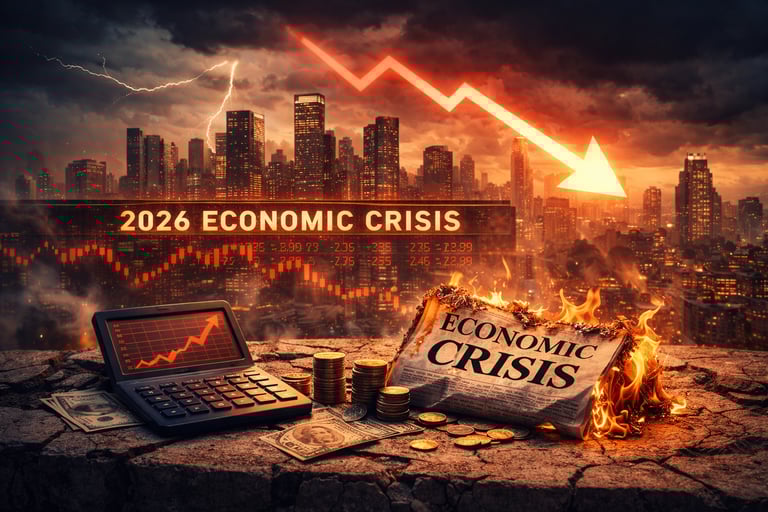
An economic crisis is characterized by a sudden and significant decline in economic activity, often marked by an increase in unemployment, a drop in consumer confidence, and a reduction in the availability of credit. Examples of economic crises throughout history include the Great Depression of the 1930s, the 2008 global financial crisis, and various sovereign debt crises. Each of these crises exhibited unique traits and root causes, yet they also shared common elements that provide insights into the nature of such downturns.
There are various types of economic downturns, including recession, depression, and stagflation. A recession, typically defined as two consecutive quarters of negative economic growth, can arise from multiple factors, including declining consumer demand and adverse market conditions. In contrast, a depression is a more severe and prolonged downturn. Stagflation presents a unique challenge, combining stagnant economic growth with high inflation, leading to a distinct set of pressures on policymakers.
The primary causes of economic crises can be categorized into three main factors: financial instability, political upheaval, and global market fluctuations. Financial instability can stem from bank failures, excessive credit risk, or unsustainable levels of debt. Political upheaval may manifest through significant legislative changes or social unrest, which can disrupt market operations and investor confidence. Lastly, global market fluctuations, which may be influenced by changes in trade policies, commodity prices, or international relations, can trigger interconnected crises across multiple economies.
Understanding these factors and historical precedents is crucial for individuals and businesses as they navigate the complexities of the economic landscape. Knowledge of what constitutes an economic crisis and its potential triggers can better equip stakeholders to anticipate challenges and formulate strategies that mitigate risks associated with such downturns.
Signs of an Impending Crisis: Economic Indicators to Watch
As we approach the year 2026, understanding the key economic indicators that signify an impending crisis is crucial for stakeholders across various sectors. Several vital metrics are commonly used to gauge the overall health of an economy and may provide early warnings of potential downturns.
First, unemployment rates are a fundamental indicator of economic stability. A sudden spike in unemployment often serves as a precursor to a recession, reflecting diminished demand for labor in response to economic contractions. Monitoring trends in job growth can offer insights into business confidence and consumer spending patterns, both of which are critical to overall economic performance.
Secondly, inflation trends warrant close attention. Rising inflation can erode purchasing power and lead central banks to implement restrictive monetary policies, which can stifle economic growth. A sustained period of high inflation, particularly if coupled with stagnant wages, often results in weakened consumer confidence, further exacerbating the risk of a crisis.
Moreover, levels of public and private debt are significant indicators of economic susceptibility. An increase in debt levels can indicate financial strain among consumers and businesses, as well as potential vulnerabilities within the banking system. A rapid escalation of debt relative to income may raise alarms about the sustainability of current economic practices.
Lastly, consumer confidence surveys reflect public perception regarding the economy's future. A sharp decline in consumer confidence can lead to reduced spending, which is a primary driver of economic activity. When consumers foresee economic difficulties, they tend to cut back on expenditures, affecting businesses and employment rates. Tracking these indicators can thus provide valuable foresight into the likelihood of an economic crisis as we move closer to 2026.
The Role of Government Policies and Global Factors
The intricate relationship between government policies and global economic dynamics plays a pivotal role in shaping the landscape of economic crises. Fiscal and monetary policies executed by governments are essential tools for influencing national economic conditions. For instance, when economic downturns occur, governments often respond with expansionary fiscal policies, including increased public spending and tax cuts, designed to stimulate growth. Conversely, during periods of inflation, tightening fiscal measures can be employed. The effectiveness of these policies, however, can be significantly influenced by the broader international context, including trade agreements and geopolitical factors.
International trade agreements can either stabilize or destabilize economies. Agreements that facilitate trade can foster economic growth and cooperation between nations, while protectionist policies may lead to trade wars, negatively impacting global markets. For example, if two major economies impose tariffs on each other, this can lead to reduced trade volumes, affecting supply chains globally and resulting in widespread economic repercussions. Geopolitical tensions, including military conflicts or diplomatic disputes, can further complicate these arrangements, causing uncertainty that reverberates across international borders.
The interconnectedness of global markets means that when crises arise in one region, the effects can swiftly spread to others. Economic downturns in a significant economy, such as the United States or China, can lead to decreased demand for goods and services worldwide, creating a ripple effect. Additionally, fluctuations in currency values can impact international investments, altering capital flows and influencing financial stability in developing countries. Collectively, understanding the roles of government policies and global factors is crucial for anticipating potential economic challenges in 2026 and beyond, as these influences can either mitigate or exacerbate emerging economic crises.
Preparing for Financial Uncertainty: Strategies for Individuals and Businesses
In light of the potential economic crises expected in 2026, it is imperative for both individuals and businesses to adopt proactive strategies to mitigate financial uncertainty. One of the foremost approaches is enhancing financial literacy. Understanding basic financial concepts such as budgeting, investing, and financial planning can empower individuals and organizations to make informed decisions.
Establishing a robust budget is a foundational strategy for navigating financial challenges. By carefully tracking income and expenses, individuals and businesses can identify areas where they can cut costs and save more effectively. A well-constructed budget also provides a clear picture of financial health, allowing for informed decision-making in times of uncertainty.
Investing wisely is another critical component of financial preparedness. Diversifying investment portfolios can help cushion against volatility and potential losses. By allocating resources across various asset classes, investors can manage risk while positioning themselves to take advantage of opportunities that arise during economic fluctuations.
Proactive financial planning is essential. Individuals should consider setting aside emergency funds to cover unforeseen expenses, while businesses might focus on maintaining cash reserves. Developing a contingency plan that outlines steps to take in response to economic downturns can also provide a safety net.
Furthermore, it is crucial to stay informed about economic trends and adapt strategies accordingly. Regularly reviewing financial goals and assessments enables individuals and businesses to remain agile in adjusting their plans as needed. Using available resources and educational opportunities can also enhance one’s financial acumen and skill set.
To conclude, as we anticipate potential economic challenges in 2026, it is vital to prioritize financial education. We encourage readers to explore comprehensive financial education resources suck as GO AI-ACADEMY to improve their understanding and readiness for upcoming economic conditions. Preparing today can lead to greater stability and resilience in the face of uncertainty.
EconoTrade Insights
Learn. Trade. Grow.
Empowering financial freedom through smart education and trusted tools.
© 2025 ECONO TRADE INSIGHTS. All rights reserved.
About - https://econotradeinsights.com/about-us-financial-blogging
Contact - econotradeinsights@gmail.com
Disclaimer - https://econotradeinsights.com/disclaimer
Terms & Conditions - https://econotradeinsights.com/terms-and-conditions