
Bitcoin Price Predictions for 2026: A Comprehensive Analysis Based on Economic and Geopolitical Factors
1/8/20264 min read

Understanding Bitcoin's Current Market Dynamics
The Bitcoin market remains a captivating landscape, shaped by various economic indicators, investor sentiment, and geopolitical events. To comprehend Bitcoin’s price trajectory, it is essential first to analyze the present market dynamics that influence its fluctuations. Factors such as inflation rates and interest rates play a pivotal role in shaping investor behavior. Presently, rising inflation has prompted investors to look for alternative assets, with Bitcoin frequently cited as a hedge against inflation due to its limited supply, which can contribute to upward price pressures.
Furthermore, interest rate decisions made by central banks significantly impact Bitcoin's appeal. If rates increase, traditional investments become more attractive due to higher returns, which might siphon liquidity away from cryptocurrencies, including Bitcoin. Conversely, low interest rates can lead investors back into the cryptocurrency market as they seek greater returns in a low-yield environment. The interplay between these economic variables creates a complex backdrop that is essential for understanding the current market behavior of Bitcoin.
In addition to economic factors, investor sentiment serves as a driving force within the Bitcoin market. Market participants are often swayed by media coverage, social media trends, and expert opinions, which can propel prices surging or plummeting within a short time frame. Consequently, positive news surrounding institutional adoption or regulatory clarity can enhance market confidence, while negative headlines can cause panic selling. Such volatility underscores the importance of both sentiment and economic indicators in determining the price performance of Bitcoin.
Ultimately, a comprehensive analysis of Bitcoin’s current market dynamics provides critical insights into potential future pricing trends, illustrating how closely intertwined economic metrics and investor psychology shape this digital asset’s landscape.
Geopolitical Influences on Bitcoin Value
The value of Bitcoin, like many assets, is significantly influenced by a range of geopolitical factors. These influences can manifest through regulatory developments in major economies, international conflicts, and evolving trade relations. Understanding these elements is crucial for making informed predictions about Bitcoin's future price trajectory.
Regulatory frameworks in countries such as the United States, China, and the European Union wield considerable influence over Bitcoin's valuation. For instance, when regulators in a prominent economy adopt favorable tax policies towards cryptocurrencies or create frameworks for safer trading, it often engenders a surge in investment and therefore a rise in prices. Conversely, heightened scrutiny, such as proposed bans or stringent regulations, can instill fear among investors, resulting in market sell-offs. The reactions of national regulators can also create ripple effects in global markets.
Additionally, geopolitical tensions or international conflicts can have a dual impact on Bitcoin's price. During periods of economic uncertainty, geopolitical volatility often drives investors towards Bitcoin, which is sometimes viewed as a safe haven asset. For example, escalating tensions in a region may cause traditional stock markets to falter, potentially spurring an influx of investment into Bitcoin as individuals seek alternative stores of value. On the other hand, conflicts that disrupt financial systems or international trading can lead to overall market instability, which might negatively impact Bitcoin and other cryptocurrencies.
Trade relations also play a critical role. A breakdown in trade agreements can lead to economic sanctions, impacting various economies and creating uncertainty that could encourage investment in decentralized assets. However, if countries take strikingly anti-crypto stances, that could create a chilling effect on Bitcoin's growth. Therefore, analyzing the intricate web of geopolitical factors is essential for comprehending how they could mold trends in Bitcoin pricing.
Expert Predictions and Analytical Models for 2026
The future price of Bitcoin, particularly by the year 2026, has sparked considerable interest and debate among financial analysts and cryptocurrency experts. Several methodologies employed to forecast Bitcoin's price demonstrate a range of predictions, from bullish optimism to more cautious bearish sentiments. Both qualitative and quantitative analyses are utilized to provide a comprehensive assessment of what investors might expect.
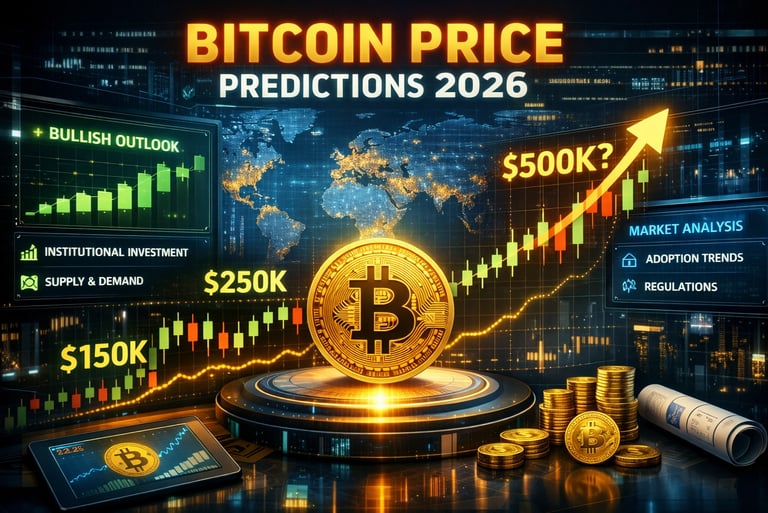
One common approach involves historical data analysis, where experts scrutinize past Bitcoin price movements and market cycles. For instance, some analysts have observed that Bitcoin tends to experience notable growth following significant halving events, which reduces the rate of new bitcoin creation. Based on historical patterns, forecasts suggest Bitcoin could potentially reach values between $100,000 and $200,000 by the end of 2026, if past trends continue.
Furthermore, models such as the Stock-to-Flow (S2F) model have gained traction within the cryptocurrency community. This model, which correlates the scarcity of Bitcoin with its price, posits a price trajectory that could see Bitcoin exceeding $500,000 in the long term. Conversely, a more conservative perspective comes from fundamental analysis, taking into account macroeconomic trends, regulatory developments, and adoption rates. Some experts highlight that unfavorable regulatory actions could hinder Bitcoin's growth, predicting prices closer to $30,000 if such measures are implemented.
The sentiment analysis of social media trends also plays a critical role in understanding market psychology as we approach 2026. Increasing mentions of Bitcoin can often reflect investor confidence, potentially driving prices higher. Overall, while predictions vary significantly, the convergence of expert analyses underscores a common belief that Bitcoin will remain a highly volatile asset influenced by a multitude of external factors. Transparency in the methodologies used is essential for gaining a clearer picture of future possibilities.
Preparing for the Future: Educational Resources and Next Steps
As we look ahead to the potential transformations in the cryptocurrency landscape, it is essential for investors to equip themselves with an understanding of bitcoin and its intricacies. Fundamental knowledge can significantly enhance one's ability to navigate the market effectively. Therefore, taking proactive steps to deepen financial literacy is crucial for anyone considering investments in digital assets.
Many credible online educational resources are available to help beginners and seasoned investors alike. Engaging with reputable platforms can provide insights into market trends, investment strategies, and the underlying technology of cryptocurrencies. One such resource is GO AI-ACADEMY, which offers a comprehensive curriculum focusing on bitcoin and various financial strategies. By enrolling in courses or participating in webinars, users can gain valuable information that will empower them to make informed decisions.
Additionally, it is vital to stay current with economic factors that may influence cryptocurrency valuations. Following credible financial news outlets, participating in forums, and joining professional networks can significantly contribute to one’s understanding of market dynamics. These activities promote a culture of continuous learning, essential for adapting to rapid changes in the financial landscape.
Investors should not hesitate to seek mentorship opportunities or online communities where experienced members can share their expertise. Engaging with peers who share a common interest can enhance knowledge acquisition and develop a more nuanced understanding of the factors influencing bitcoin pricing.
In conclusion, investing in education about bitcoin and broader cryptocurrency topics will provide individuals with the necessary tools for informed decision-making. Taking these next steps can ultimately empower investors to thrive in an evolving financial world.
EconoTrade Insights
Learn. Trade. Grow.
Empowering financial freedom through smart education and trusted tools.
© 2025 ECONO TRADE INSIGHTS. All rights reserved.
About - https://econotradeinsights.com/about-us-financial-blogging
Contact - econotradeinsights@gmail.com
Disclaimer - https://econotradeinsights.com/disclaimer
Terms & Conditions - https://econotradeinsights.com/terms-and-conditions