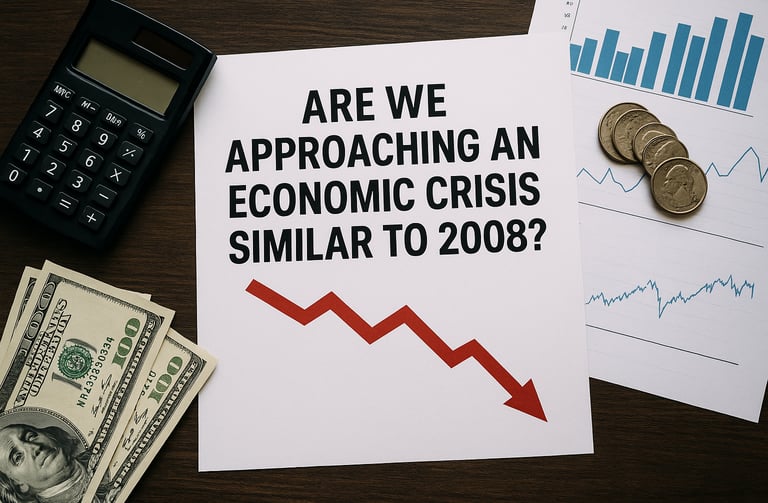
Are We Approaching an Economic Crisis Similar to 2008? Understanding Current Trends
12/14/20258 min read
Introduction: The Economic Landscape Today
As we analyze the current economic climate, it is crucial to understand the elements that might lead us towards an economic crisis reminiscent of the 2008 financial meltdown. While the economic landscape today exhibits certain similarities to that turbulent period, it also features distinct differences that merit examination. Analysts and economists are paying close attention to key indicators such as inflation rates, job market fluctuations, and the condition of the housing market, all of which provide valuable insights into our current trajectory.
Inflation has emerged as a significant concern in recent times. Over the past few years, consumers have experienced rapidly rising prices across a variety of sectors, including food, energy, and housing. This surge in inflation draws parallels with the pre-crisis environment of 2008 when rising housing costs contributed to the bursting of the financial bubble. Presently, the Federal Reserve’s monetary policy aims to combat inflation; however, these measures raise questions about potential impacts on economic growth and consumer confidence.
In addition to inflation, trends in the job market are crucial indicators of economic health. The labor market has shown resilience in some areas, with unemployment rates remaining relatively low. However, the quality of jobs and wage growth presents a mixed picture. Many workers still face stagnant wages and job insecurity, reminiscent of the labor market conditions leading up to the previous crisis. If these trends continue, they could contribute to broader economic vulnerabilities.
Finally, the housing market presents another layer of complexity. Recent fluctuations in home prices and interest rates may signal an impending shift. While the market has shown signs of stability, concerns about affordability and accessibility persist, which could lead to a downturn. Overall, understanding these indicators is essential for discerning whether we are indeed on the path toward another economic crisis similar to 2008.
Key Indicators of Economic Stability
In evaluating the health of an economy, analysts and investors closely monitor a variety of key indicators. Among these, Gross Domestic Product (GDP) growth stands as a primary barometer of economic performance. A consistently rising GDP reflects robust economic activity, while stagnation or decline can indicate potential instability. For instance, current trends suggest a modest GDP growth rate, which may raise concerns regarding the sustainability of economic expansion.
Employment figures also play a critical role in assessing economic health. The unemployment rate, alongside job creation statistics, offers insights into labor market conditions. High employment levels typically signal economic strength, as more individuals are gainfully employed, contributing to consumer spending and overall economic activity. However, recent increases in unemployment claims could suggest economic strain, warranting further investigation into potential causes like industry downturns or shifts in consumer behavior.
Consumer spending is another vital indicator of economic stability. It represents the total expenditure by households on goods and services and serves as a major driver of GDP. When consumer confidence is high, spending tends to increase, fostering economic growth. Conversely, declines in consumer spending may foreshadow a contracting economy, indicating that households are becoming more cautious in their financial decision-making. Current reports indicate mixed signals in consumer sentiment, with some sectors showing resilience while others lag behind.
Lastly, credit availability is essential for both consumer and business expenditure. Lenders assess economic conditions to determine their lending policies. Tightening credit can hinder economic growth, as businesses may struggle to secure financing for expansion or operations. Recent data suggests fluctuations in credit availability, which could have implications for future economic activity. Overall, understanding these key indicators is crucial in identifying potential risks of an economic crisis similar to that of 2008.
Comparing Current Trends to the 2008 Financial Crisis
In recent years, many economists and financial analysts have drawn parallels between current economic trends and the circumstances leading up to the 2008 financial crisis. Understanding these comparisons requires a deep dive into various economic indicators, with particular emphasis on the housing market, credit conditions, investor sentiment, and regulatory changes.
The housing market, a key player in the previous crisis, is witnessing varying trends today. During the 2000s, a rapid increase in housing prices, fueled by low interest rates and speculative buying, created an unsustainable bubble. Presently, while housing prices have surged in many regions, there is evidence that affordability issues may be tempering this growth. Rising mortgage interest rates have made homeownership less attainable for many, signaling potentially differing dynamics as compared to 2008, where rampant speculation predominated.
Credit conditions also reflect evolving financial landscapes. In 2008, the prevalence of subprime mortgages and lax lending standards contributed significantly to the crisis. Today, there has been a tightening of credit standards; banks are more cautious following the lessons gleaned from the past. However, concerns about rising consumer debt levels and increased lending to riskier borrowers could indicate troubling patterns akin to those seen before the financial collapse.
Investor sentiment is another critical factor in this comparative analysis. In 2008, excessive optimism and confidence among investors eroded as market fundamentals weakened. The present environment presents a more cautious approach, yet volatility remains rampant in markets, spurred by inflationary pressures, geopolitical tensions, and uncertain economic forecasts.
Additionally, regulatory measures implemented post-2008, such as the Dodd-Frank Act, have reshaped the financial landscape, aimed at preventing another similar crisis; however, debates continue about their effectiveness. As such, while there are clear similarities between today’s economic environment and that of 2008, significant differences exist that warrant closer examination. Each component serves as a critical indicator that can validate or refute claims of an impending economic crisis.
The Role of Cryptocurrency in Economic Shifts
The rise of cryptocurrencies has undeniably altered the landscape of global financial systems, especially in light of recent economic uncertainties. Bitcoin, Ethereum, and an array of altcoins have gained significant traction among investors seeking alternative asset classes. The decentralized nature of these digital currencies provides a distinct advantage during economic turbulence. In contrast to traditional fiat currencies, cryptocurrencies are not directly tied to any governmental policies or economic downturns, thereby potentially offering a hedge against inflation and currency devaluation.
As we witness shifts in global markets akin to those experienced in 2008, the appeal of cryptocurrencies as a safe haven has grown. Investors are increasingly pivoting towards digital currencies, perceiving them as a means to preserve wealth amidst declining stock markets and rising geopolitical tensions. The blockchain technology that underpins cryptocurrencies enhances transparency and security, establishing greater trust within the realm of digital transactions. This burgeoning trust can foster increased adoption, further embedding cryptocurrencies as a viable component in diversified investment portfolios.
Moreover, the proliferation of innovative financial products centered around cryptocurrencies, such as decentralized finance (DeFi) platforms, allows individuals to earn interest on their crypto holdings or take out loans without the intervention of traditional banks. These novel mechanisms signify a shift in the way individuals view financial stability, particularly during periods when conventional financial institutions may falter. The rising interest in crypto investments during these uncertain times illustrates a significant departure from traditional assets, signaling a transformative moment in the quest for economic resilience.
For those considering investments in cryptocurrencies, it is advisable to conduct thorough research and stay informed about market trends. As the evolution of digital currencies continues to unfold, ensuring that one is well-equipped to navigate this complex landscape will be essential. To further explore cryptocurrency trading, consider checking out our recommended crypto exchange OKX-Exchange.
Public Sentiment and Market Psychology
Public sentiment plays a pivotal role in shaping economic stability, as it significantly influences consumer behavior and investor decisions. In today's financial landscape, the collective mood surrounding the economy can either bolster market performance or pave the way for downturns. Consumer confidence, a key indicator of public sentiment, reflects individuals' perceptions regarding their financial situation and the economy at large. When people feel secure in their economic prospects, they are more inclined to spend, stimulating growth. Conversely, a decline in confidence can lead to reduced spending, which can contribute to an economic downturn reminiscent of the 2008 crisis.
Recent surveys illustrate a complex emotional landscape. For instance, data from the University of Michigan's Consumer Sentiment Index indicates fluctuations in consumer sentiment influenced by rising inflation and geopolitical tensions. Many consumers report heightened anxiety regarding their financial futures, which could manifest in cautious spending habits and reduced investment. Highlighting the importance of this psychological aspect, investors often mirror consumer confidence in their market activities. When fear and uncertainty predominate, investors may withdraw from the market, triggering volatility that can exacerbate economic struggles.
Furthermore, behavioral economics points to the tendency of market psychology to create feedback loops, amplifying sentiments on both the positive and negative sides. The fear of missing out (FOMO) during bullish markets can drive excessive risk-taking, while panic selling in bearish trends can steepen declines. This cyclical nature of investor emotions underscores the fragility of market conditions; even slight changes in sentiment can lead to significant market disruptions. As we navigate the current economic climate, understanding these psychological drivers becomes essential for forecasting potential downturns and mitigating adverse outcomes in a way similar to the events experienced in 2008.
Financial Education: A Necessity During Economic Uncertainty
In the face of potential economic peril resembling that of 2008, the significance of financial education has never been more apparent. With fluctuating markets, rising inflation, and shifting employment landscapes, a solid understanding of personal finance principles is crucial for individuals and families alike. Financial literacy empowers people to make informed decisions, effectively manage their resources, and develop strategies to navigate through uncertain times. This skill set becomes essential to mitigate risks and optimize financial well-being.
During economic uncertainty, having a firm grasp of financial concepts—such as budgeting, investing, and credit management—can help individuals avoid pitfalls that could lead to further financial distress. Implementing sound financial strategies allows for better preparation in times of crisis. For instance, understanding how to build and maintain an emergency fund or recognizing the importance of diversifying investments can provide individuals with greater security when the economy takes a downturn. Financial education equips people with the tools needed to withstand economic fluctuations while also fostering long-term stability.
To enhance one’s financial literacy, various resources are available. Numerous online platforms offer courses, webinars, and videos tailored to different aspects of personal finance. Additionally, reading books on finance and attending community workshops can provide valuable insights and practical skills. Engaging in discussions about financial topics with peers or seeking mentorship from financially savvy individuals can also foster a supportive learning environment. For those interested in structured financial education, consider exploring GO AI-ACADEMY, which offers comprehensive resources to boost financial understanding.
By prioritizing financial education during these uncertain times, individuals can build resilience and prepared to make prudent financial decisions, ultimately steering clear of the devastating consequences that marked the last major financial crisis. The knowledge gained through ongoing financial learning is a vital tool for navigating today's complex economic landscape.
Conclusion: Preparing for Potential Economic Challenges
As we reflect on the current economic landscape, it is evident that the signs of potential challenges are becoming more pronounced. The analysis presented in earlier sections highlights various economic indicators, such as fluctuating employment rates, increasing inflation, and shifts in consumer spending patterns. These factors are reminiscent of the prelude to the 2008 financial crisis, urging a call for vigilance. It is crucial for individuals and businesses alike to recognize these emerging trends and prepare accordingly.
Staying informed about economic developments is essential for navigating uncertain times. Subscribers to financial news outlets or those who follow economic analysis can gain valuable insights into market shifts. Understanding these trends not only aids in recognizing potential risks but also in identifying opportunities within the economy. Being proactive in acquiring knowledge about economic conditions equips individuals to make informed decisions regarding their finances.
In making wise investment decisions, diversification remains a fundamental strategy to mitigate risks. Investors should reflect on their portfolios and consider adjusting their asset allocation in response to current economic signals. This may involve balancing higher-risk investments with safer options to maintain a stable financial footing. An investment strategy that adapts to changing economic circumstances is vital for sustaining long-term financial health.
Additionally, leveraging financial education resources offers individuals the tools to better understand economic dynamics. Workshops, webinars, and online courses can enhance financial literacy, empowering individuals to take control of their financial futures. This proactive engagement is key to fostering resilience against potential economic turmoil.
In summary, preparing for potential economic challenges is not merely a response to current trends but a necessary component of assured financial management. By staying informed, making prudent investment choices, and seeking continuous education, individuals can better position themselves to navigate the complexities of the economy, especially in times reminiscent of past crises.
EconoTrade Insights
Learn. Trade. Grow.
Empowering financial freedom through smart education and trusted tools.
© 2025 ECONO TRADE INSIGHTS. All rights reserved.
About - https://econotradeinsights.com/about-us-financial-blogging
Contact - econotradeinsights@gmail.com
Disclaimer - https://econotradeinsights.com/disclaimer
Terms & Conditions - https://econotradeinsights.com/terms-and-conditions